
A Strategic Guide for SES – Strategic Email System
Email outreach in 2026 is not about sending more messages. It’s about sending fewer, smarter, systematized emails that combine:
- Precise targeting
- High‑signal personalization
- Clear commercial logic
- And disciplined follow‑up
SES (Strategic Email System) is built to operationalize this: turning one‑off email ideas into a repeatable outreach machine. This article outlines the best practices in 2026 and shows how SES applies them, with examples from dental and medical B2B (manufacturers, distributors, labs, practices, medtech, etc.)
- The 2026 Reality: Why Most B2B Outreach Still Fails
Despite AI tools and automation, most B2B outreach still fails because:
- Lists are too broad.
- “Healthcare” instead of “U.S. dental lab distributors with CAD/CAM focus and 10–200 employees.”
- Personalization is superficial.
- “Hi [FirstName], I saw your profile on LinkedIn…” with no real insight about the recipient’s business.
- No clear commercial hypothesis.
- No reason why this company should care now.
- Sequences are random.
- One long email, then silence. Or 10 follow‑ups with no added value.
- No system.
- Outreach is done in bursts, by individuals, with no unified framework, assets, or learning loop.
SES is designed to solve these problems systematically. The core practices below are what SES is built around.
- Step One: Strategic Targeting, Not “Big Lists”
In 2026, the quality of your list is still the #1 predictor of outreach success.
2.1 Define your ICP with operational precision
For B2B (e.g., dental/medical), an ICP should be specific enough that you exclude more than you include. For example:
- Segment: U.S. dental lab distributors and CAD/CAM material suppliers
- Size: 10–200 employees
- Region: Nationwide or specific regions (e.g., Midwest + East Coast)
- Business model: Supply to dental labs (not only clinics), with a focus on lab materials or CAD/CAM
- Technology level: Already selling or supporting digital workflows (e.g., milling, 3D printing, scanners)
SES best practice:
Create structured ICP definitions in your CRM or spreadsheet: fields like industry, size_range, segment, region, primary_products, lab_focus. Your targeting should allow simple filters like:
“Give me all U.S. dental lab distributors, 10–200 employees, selling CAD/CAM discs or digital lab solutions.”
2.2 Segment by “Job to Be Done”, not just by industry
Within your ICP, segment by the problem you solve for each role:
- For Product Managers / Category Managers:
- “Improve portfolio differentiation and margin with a better material line.”
- For Sales Directors / Territory Managers:
- “Make it easier to sell to labs with a more compelling product story and fewer complaints.”
- For CEOs / Owners (smaller distributors/labs):
- “Increase revenue per customer and reduce risk with proven, FDA‑cleared materials.”
SES best practice:
Map segments to message pillars. Each segment gets a set of email templates tied to its core business problem, not just its job title.
- Personalization That Matters in 2026
AI can now generate personalized intros at scale, but most of it is noise. The bar has gone up: people can tell which personalization is automatic and which is based on real understanding.
3.1 The “two‑line rule”
In 2026, effective cold emails typically have:
- 1–2 truly bespoke lines at the top
- A reusable core body that’s tailored by segment, not by individual
For example (dental distributor Product Manager):
“I saw that your catalog includes multiple lines of lab discs and denture materials, and that you position yourself as a partner to both high‑volume and high‑end labs.
We help distributors strengthen that positioning with a polymer material line that…”
The first sentence is based on actual catalog and positioning research, not generic LinkedIn fluff.
SES best practice:
- Maintain a research checklist for each contact:
- Website product categories
- How they describe their positioning (“partner to labs”, “leading digital provider”, etc.)
- Any visible gaps or strengths (e.g., strong in zirconia, weaker in polymer discs)
- Use that research to create short custom intros above a standardized, tested core email.
3.2 Contextual personalization by company type
For example, in the dental / medical sector:
- Distributors: Focus on portfolio fit, margin, and demand.
- Labs: Focus on workflow, remakes, turnaround, and technician time.
- Clinics / Practices: Focus on patient outcomes and reliability.
SES best practice:
Create persona‑specific building blocks:
- One set for distributors
- One for labs
- One for clinics
Then mix these with a segment‑specific value proposition.
- Email Structure That Works in 2026
The core structure hasn’t changed much – but expectations for clarity and brevity have.
4.1 Anatomy of a high‑performing B2B cold email
- Subject line: clear, low‑hype, problem‑oriented
Examples for dental/medical B2B:
-
- “Question about your dental lab materials range”
- “Idea for your CAD/CAM disc portfolio”
- “Gap in your lab prosthetics offering?”
- First line: show you did your homework
- Reference something concrete:
- Product categories
- A positioning statement on their website
- A recent initiative/article/event
- Reference something concrete:
- Context: who you are and why you’re relevant (1–2 lines)
- “We help manufacturers and distributors improve the performance and economics of their lab material lines…”
- Core value proposition: 2–3 bullets, outcome‑driven
In dental/medical outreach, focus on measurable benefits:
-
- Fewer remakes and complaints
- Faster workflows (less finishing, quicker polishing)
- Longer wear / better performance for patients
- Strong regulatory backing (e.g., FDA clearance)
- Single, clear CTA
- “Would it be worth a short call next week to see if this could strengthen your lab materials range?”
- Offer 2–3 time slots, or simply ask if they are the right person.
- Length: 80–150 words
Avoid attachments in the first email; briefly mention you can share a 1‑page overview on reply.
SES best practice:
Test 3–5 subject lines and 2–3 core body variants per segment; roll winners into the SES template library.
- Sequences and Follow‑Ups: Designed, Not Improvised
In 2026, a single email is rarely enough. But mindless sequences of 10+ bumps also fail. The key is designed, value‑adding sequences, typically 4–6 touches over 2–3 weeks.
5.1 Example SES sequence for B2B dental/medical outreach
Email 1 – Introduction & core value
- Purpose: Establish relevance and start a conversation.
- Content: Personal intro + 2–3 outcome‑focused bullets + simple CTA.
Email 2 – New angle: workflow or economics (3–5 days later)
- Purpose: Add value, not just “bump”.
- Content:
- Brief reference to the first email.
- New angle: for labs, maybe “milling behavior and technician time”; for distributors, “fewer complaints and higher margin per SKU.”
- Optional 1‑sentence anonymized example:
- “One lab customer reduced remakes on a specific indication by X% after switching to a different disc material.”
- CTA: Ask if they’d like a short, tailored comparison against their current range.
Email 3 – Very short bump (3–7 days later)
- Purpose: Get a quick yes/no without pressure.
- Content:
- “Just forwarding this in case it got buried.
Worth a quick look, or should I circle back later in the year?”
- “Just forwarding this in case it got buried.
Email 4 – Social / alternative channel touch
- Purpose: Add a non‑email touch.
- Action:
- View LinkedIn profile, send a short connection note:
- “Working on some lab material performance projects that might be relevant to your portfolio – happy to share benchmarks if useful.”
- View LinkedIn profile, send a short connection note:
Email 5 – Final touch / open door (1–2 weeks later)
- Purpose: Close the loop respectfully.
- Content:
- “I don’t want to overload your inbox. If improving [specific outcome] becomes a priority later this year, I’m happy to share a short overview or case example on request.”
SES best practice:
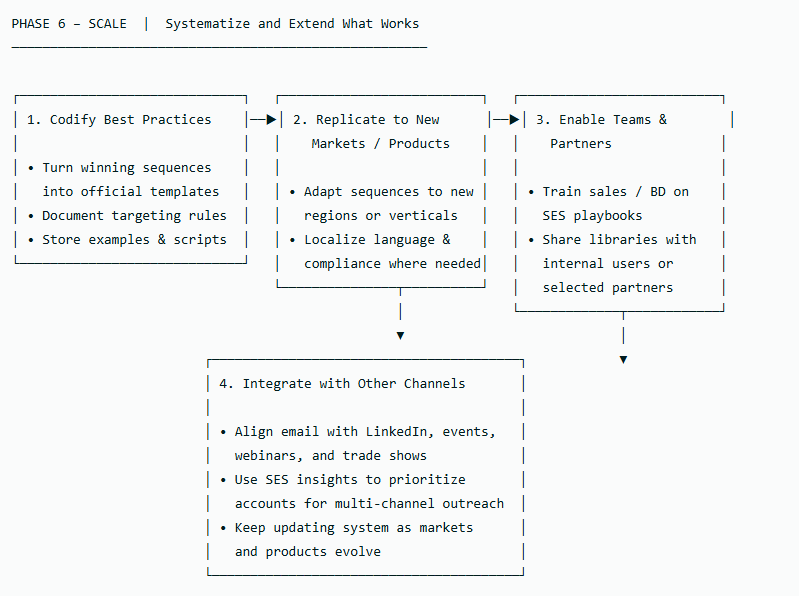
- Standardize this per segment (e.g., distributors, labs, clinics).
Automate scheduling, but write each sequence intentionally (no generic “just bumping this to the top of your inbox” 5 times).
-
Deliverability & Compliance in 2026
Deliverability & Compliance in 2026
Technical and legal hygiene are as important as messaging.
6.1 Technical best practices
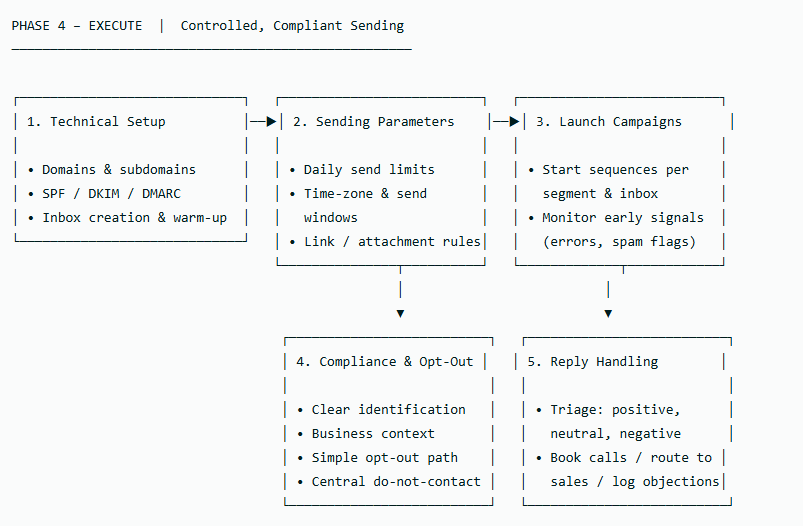
- Use a dedicated sending subdomain (e.g., outreach.yourdomain.com).
- Ensure SPF, DKIM, and DMARC are configured and monitored.
- Warm up new domains/inboxes gradually.
- Limit daily sends per inbox (keep it human‑scale).
- Avoid heavy images or many links in first‑touch emails (1 link max, or none).
6.2 Compliance and data privacy
- Honor unsubscribe and do‑not‑contact requests quickly.
- For EU or similar jurisdictions, align with local regulations on consent and legitimate interest.
- Be transparent:
- Who you are
- Why you’re reaching out (business context)
- How they can opt out
SES best practice:
Bake deliverability and compliance rules into your system, not into individual habits:
- Standard technical setup
- Central opt‑out list
- Template‑level language that respects recipients
- Using SES as a Strategic System, Not Just Email Templates
SES – Strategic Email System – should be viewed as a framework and an operating system, not just a set of templates.
7.1 Core components of SES in 2026
- ICP & segmentation engine
- Clear definitions of who you target and why.
- Filters for job roles, company types, and “job to be done”.
- Message libraries & playbooks
- Modular email sequences per segment and persona.
- Research checklists to generate meaningful personalization.
- Data assets
- Curated prospect lists (e.g., dental distributors, labs, medical device companies).
- Competitive and partner research that informs targeting and messaging.
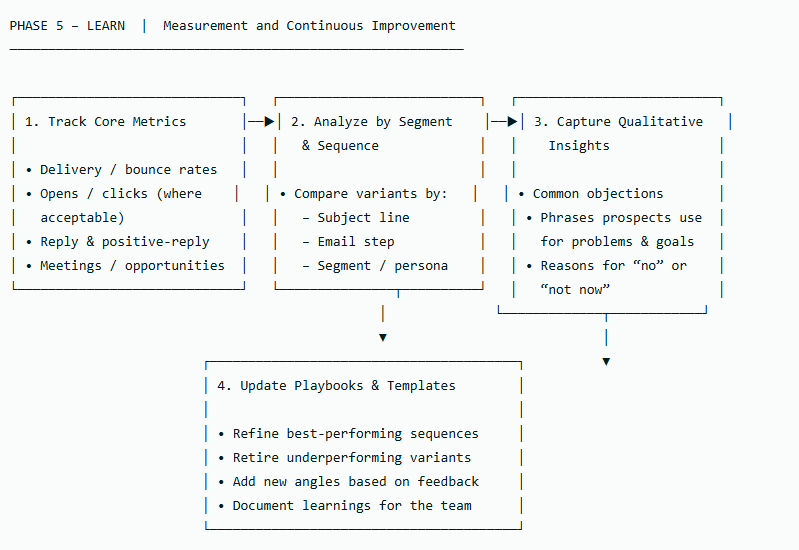
- Measurement & learning loop
- Track open rates, reply rates, positive reply rates, booked calls.
- Learn which sequences and angles work best for each segment.
- Feed this back into new versions of the SES templates.
- Operational discipline
- Clearly defined outreach volumes.
- Ownership by specific team members.
- Regular review cycles (e.g., monthly “SES review” sprints).
-
Dental / Medical Example: Putting It All Together
Dental / Medical Example: Putting It All Together
Imagine a manufacturer of advanced dental lab materials (e.g., polymer teeth and CAD/CAM discs) looking to expand in the U.S.
Using SES best practices in 2026:
- Define ICP
- Target: U.S. dental lab distributors and CAD/CAM material suppliers, 10–200 employees, focusing on labs (not only clinics).
- Segment roles
- Primary: Product Managers, Category Managers
- Secondary: Sales Directors, Owners (for smaller firms)
- Craft segment‑specific value propositions
- For Product/Category:
- “Strengthen your lab materials portfolio with a proven, FDA‑cleared polymer line that extends wear time and improves milling behavior.”
- For Sales:
- “Give your reps a material that’s easier to sell to labs: better surface finish, less finishing time, fewer complaints.”
- For Product/Category:
- Build SES sequences
- 4–6 touch sequences, each email adding a new angle:
- Portfolio fit
- Lab workflow efficiency
- Economics (remakes, complaints, margin)
- Regulatory and risk reduction
- 4–6 touch sequences, each email adding a new angle:
- Execute with discipline
- Use a structured database (from research)
- Track outcomes per segment
- Refine messages based on real‑world replies
This is SES in practice: a repeatable, data‑driven, learning outreach system.
-
Future‑Proofing Your Outreach
Future‑Proofing Your Outreach
By 2026, AI can draft emails, summarize websites, and score leads.
What doesn’t change:
- You still need a clear strategy: whom you’re targeting, why, and with what offer.
- You still need human judgment to define value propositions and sequence logic.
- You still need a system like SES to ensure outreach is consistent, measurable, and continuously improving.
If you treat outreach as random messages, results will stay random. If you treat it as a Strategic Email System, you build a durable, compounding asset that supports every new market entry or product launch.
How SES – Strategic Email System – Works
SES is not just a set of email templates; it is a structured system for designing, executing, and improving B2B outreach campaigns.
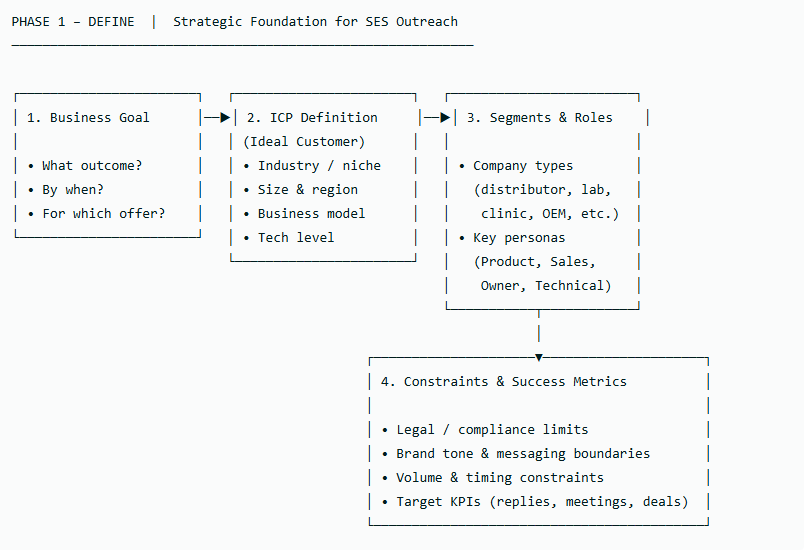
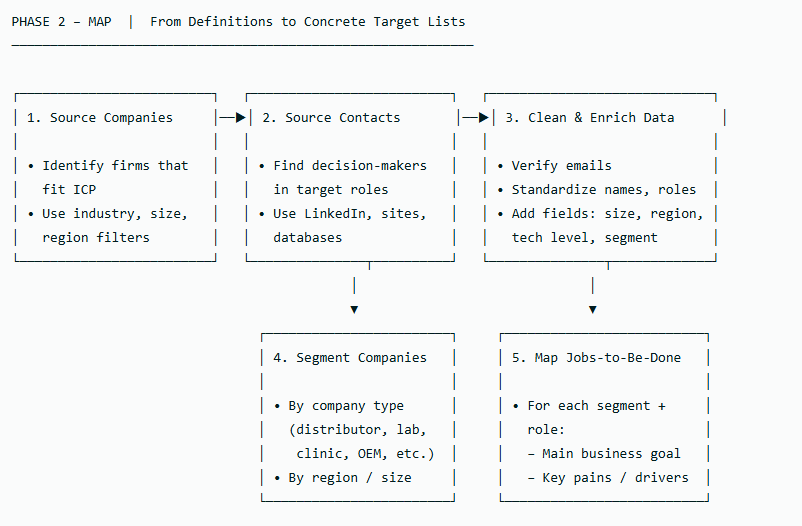
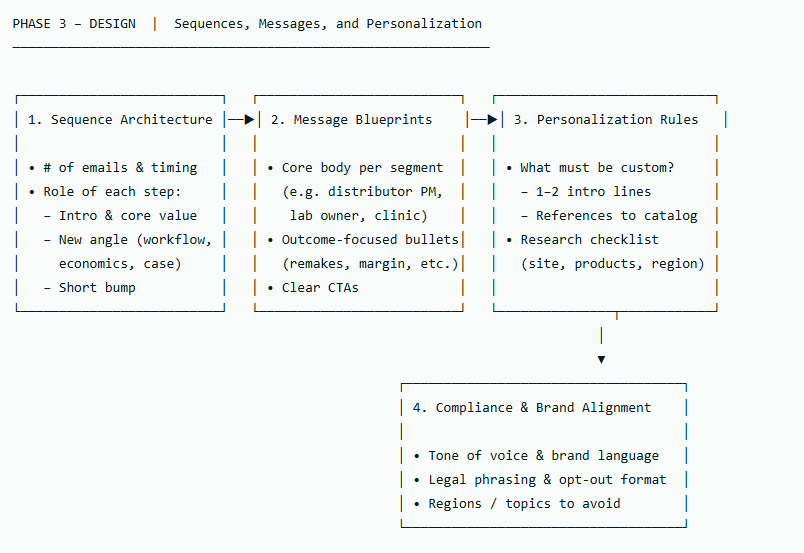
At a high level, SES runs through six core phases: 1. Define, 2. Map, 3. Design, 4. Execute, 5. Learn, 6. Scale
Have a Question
Turn Emails Into Opportunities with SES
Ready to see what happens when your outreach actually reaches and activates decision-makers? With SES, you get more than opens—you get outcomes.
Let’s unlock your next big business win, together.